I have never been particularly interested in drinking beer just to collect labels or chase ratings. For me, beer has always been tied to a place, a meal and the people around the table.
A cold lager tastes different with a plate of spicy food at a night market in Asia. A dark Belgian ale can bring out flavors in a slow-cooked stew that you barely noticed before. A tart fruit lambic may seem challenging on its own, then suddenly make perfect sense alongside rich cheese, roast duck or even chocolate.
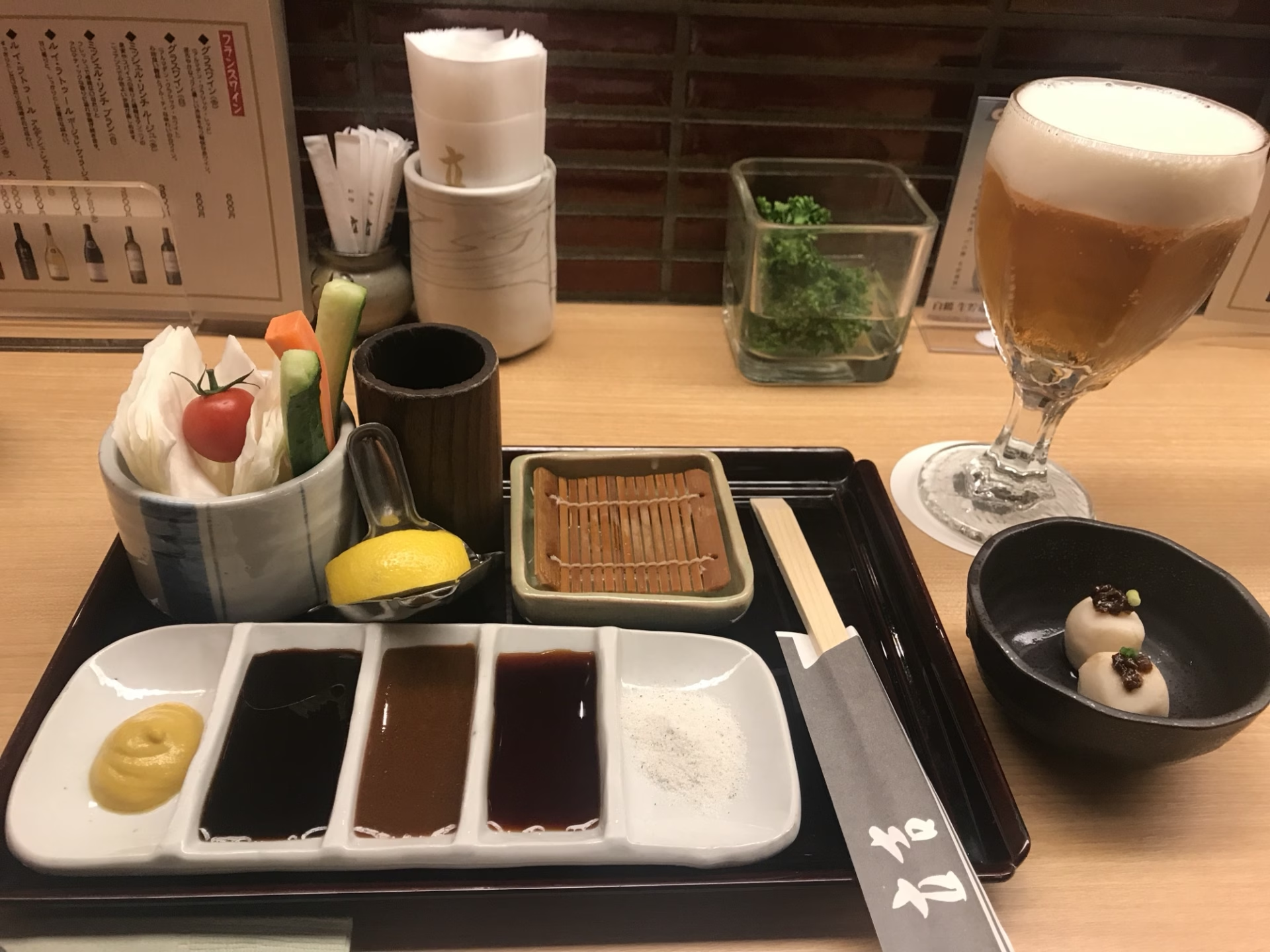
One meal has always stuck with me. Sitting at a small restaurant in Japan, I found myself moving between fresh vegetables, dipping sauces and a crisp local beer. Every bite changed the beer slightly, and every sip prepared me for the next flavor. It reminded me that great pairings aren’t always about finding one perfect match. Sometimes they’re about discovering how a single beer can complement an entire meal.
After years of traveling, eating and trying more beers than I ever expected to keep track of, I have come to see beer and food pairing as less of a science and more of a conversation. Sometimes the beer echoes the flavors on the plate. Sometimes it cuts straight through them. And sometimes a pairing that sounds completely wrong on paper turns out to be the one you remember years later.
The good news is that you do not need to be a beer expert to get better at pairing beer with food. You just need to understand a few basic ideas, avoid some common mistakes and be willing to experiment.
Why Pair Beer With Food?
Wine usually gets top billing when people talk about serious food pairings. I love wine too, but beer has an extraordinary range of flavors to work with.
Think about the difference between a crisp Czech pilsner, a hazy American IPA, a peppery Belgian saison, a rich Trappist quadrupel, a smoky German rauchbier and a spontaneously fermented Belgian gueuze. They are all beer, but from a food-pairing perspective, they have about as much in common as lemonade, espresso and red wine.
Beer also has a secret weapon: carbonation. Those bubbles can help refresh your palate between bites, especially with fatty, salty or fried foods. Bitterness can cut through richness. Malt sweetness can soften roasted or spicy flavors. Acidity can brighten a heavy dish. Yeast character can echo herbs and spices. Great pairings aren’t just about flavor. Texture matters just as much as flavor. A crisp, lively beer can refresh your palate after rich food, while a fuller-bodied beer can feel perfectly at home beside a hearty winter meal.
A good beer and food pairing does not simply give you a nice beer next to nice food. Ideally, something happens when you taste them together. The beer changes the food, the food changes the beer or both become more interesting than they were on their own. That’s the real point of pairing.
And don’t worry if you “get it wrong.” Some of my favorite discoveries have come from opening a bottle simply because it sounded good with dinner, not because a pairing chart told me to.
Four Basic Ways Beer and Food Pairings Work
There are endless theories about how to pair beer with food, but I find it easier to think about four basic relationships: complement, contrast, cut and cleanse.
Complement similar flavors
This is the most intuitive approach. Find flavors in the beer that already exist in the food.
A roasty stout with grilled meat is an obvious example. A Belgian dubbel with a slow-cooked stew can work because the beer’s dark fruit, caramel and malt character finds similar flavors in the dish. A citrus-forward beer may connect beautifully with food that uses lemon, orange or fresh herbs.
The risk is overdoing it. More on that shortly.
Create contrast
Sometimes opposites are far more interesting.
A crisp, dry beer can be wonderful with rich food. A tart beer can wake up something fatty. A slightly sweet beer may soften salty or spicy flavors.
This is one reason I find sour beer so exciting at the table. A traditional gueuze does not need to taste anything like a plate of fried food to work with it. The contrast is the point.
Cut through richness
Some foods coat your palate. Think fried chicken, creamy cheese, pork belly, buttery sauces or rich sausages.
A beer with lively carbonation, bitterness or acidity can help clear that richness between bites. This is why a crisp pilsner can be far more interesting with fried food than its relatively simple flavor profile might suggest.
Cleanse and reset the palate
Not every beer needs to dominate the meal.
Sometimes the best pairing is a beer that lets you enjoy the next bite as much as the first. This matters with salty snacks, fried foods and meals with lots of small dishes. It is also one reason simple lagers can be fantastic food beers.
There is a time for a massive barrel-aged imperial stout. There is also a time when it would flatten everything on the table.
What Happens When a Beer and Food Pairing Goes Wrong?
Bad beer pairings are often more useful than good ones because they teach you what actually matters.
The biggest problem is usually imbalance. One half of the pairing overwhelms the other.
Imagine a delicate white fish next to a 12% Belgian quadrupel. You may love both, but the fish barely stands a chance. Put a subtle pilsner next to heavily smoked brisket and you may forget the beer is even there.
Other pairings actively make flavors less pleasant.
A highly bitter IPA can sometimes amplify the heat of a chili rather than calming it. A very sweet pastry stout with an equally sweet dessert may become exhausting after a few bites. A sharply acidic sour next to an aggressively acidic dish can leave your mouth feeling like it has been through a workout.
That does not mean any of these combinations are universally wrong. Personal taste matters, and individual beers vary enormously even within the same style. But if a pairing consistently makes either the beer or the food less enjoyable, something is probably off.
Before giving up on a pairing, consider the beer itself. Serving temperature can make a surprising difference. A beer that’s too cold may hide its aromas, while one that’s too warm can make bitterness or alcohol seem more noticeable.
Common Beer and Food Pairing Mistakes to Avoid
One of the biggest mistakes is relying too heavily on beer styles.
“IPA with spicy food” gets repeated constantly. But which IPA? A lower-alcohol session IPA with bright citrus character is very different from a resinous double IPA pushing 9% alcohol. Bitterness and alcohol can both intensify the sensation of chili heat.
The same problem comes up with stout. A dry Irish-style stout is not interchangeable with a thick, sweet imperial stout aged in bourbon barrels. Pairing by style name alone ignores intensity, sweetness, alcohol and the actual flavors in the glass.
A few other mistakes come up repeatedly:
- Matching intensity poorly. A huge beer can erase delicate food, while a subtle beer can disappear next to a powerful dish.
- Assuming similar flavors always complement each other. Smoke with smoke sounds logical until everything tastes like a campfire.
- Stacking sweetness on sweetness. Chocolate stout and chocolate cake can work, but an extremely sweet version of each may become cloying.
- Ignoring the sauce, seasoning or cooking method. Grilled chicken, fried chicken and chicken in a chili-heavy sauce are three completely different pairing problems.
- Choosing the rarest beer instead of the right beer. Special does not automatically mean appropriate.
I love complex Belgian beers, but there are meals where I would rather have a fresh pilsner or simple table beer. Sometimes the less dramatic beer is the better food partner.
Classic Beer and Food Pairings That Work
Some combinations become classics for good reason. If you are new to beer and food pairing, these are useful places to start.
Stout and oysters may sound strange if you have never tried it, but roasted malt can play beautifully against the briny, mineral qualities of the oysters.
Hefeweizen and sausage is another natural fit. The beer’s carbonation and wheat character work well with rich sausage, while familiar banana and clove notes can complement the spices.
Pilsner and fried food is one of the easiest pairings to love. Crisp bitterness and carbonation help keep fried chicken, schnitzel, fries and croquettes from becoming too heavy.
Saison and goat cheese can be excellent because the beer’s dry, peppery and sometimes earthy character has enough personality for the cheese without simply overwhelming it.
Belgian dubbel or quadrupel with braised meat is a pairing I return to often. Dark fruit, caramelized malt and warming alcohol can connect with the deep flavors of slow-cooked beef and rich sauces. There is a reason beer feels so at home in Belgian cooking.
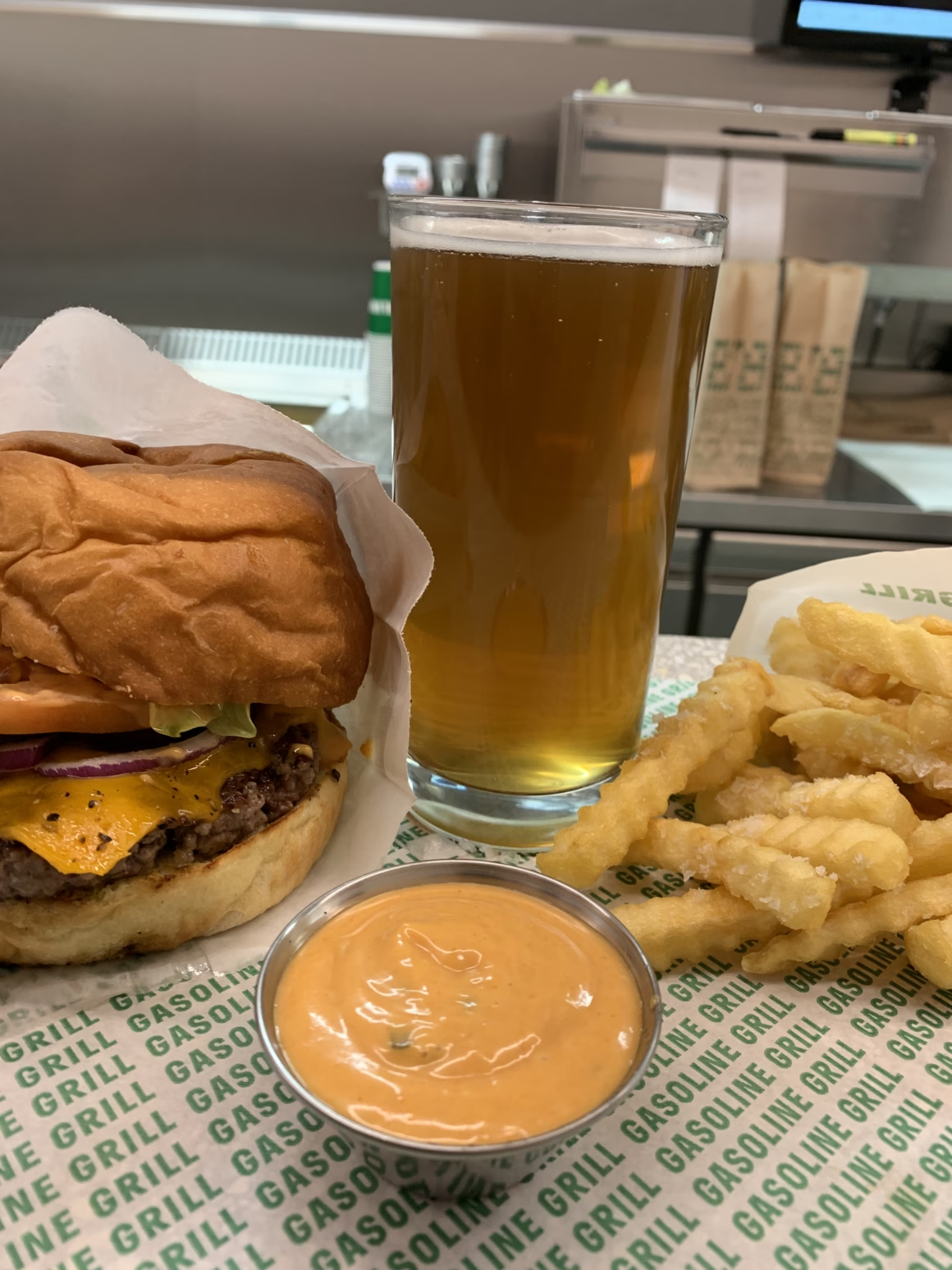
And yes, IPA with a burger can work very well. A good IPA has enough bitterness and flavor intensity to stand up to beef, cheese and caramelization from the grill. Just remember that the bigger IPA is not always the better IPA.
These classics are useful, but they are only a starting point. One rule that has served me remarkably well while traveling is to pair local beer with local food whenever you can. Belgian dubbel with Flemish stew, German helles with a warm pretzel, Czech pilsner with schnitzel or a local Italian craft beer alongside Parmigiano Reggiano all feel natural because they evolved alongside the cuisine. It isn’t a hard rule, and there are plenty of exceptions, but if you’re staring at an unfamiliar menu wondering where to start, ordering the local beer is one of the easiest ways to discover a pairing that simply makes sense. From there, the fun begins when you start moving beyond the obvious choices.
If you ever find yourself planning a trip around food and drink, Belgium is one of the easiest places in the world to experience this philosophy. Brewery cafés, local restaurants and centuries-old beer traditions make it almost impossible to have a bad pairing.
Unexpected Beer and Food Pairings Worth Trying
This is where beer pairing becomes fun. You can read charts all day, but the combinations that stick with me are often the ones that initially sound a little odd.
Oude gueuze and fried food
This is one of my favorite examples of beer acting almost like sparkling wine.
Traditional oude gueuze can bring lively carbonation, bright acidity, dryness and layers of fermentation character. Put that next to something fatty and fried, whether it is Belgian fries, croquettes or fried chicken, and the beer can slice through the richness beautifully.
Kriek and duck
Cherry and duck already have a long culinary relationship, so traditional kriek is not as strange a pairing as it first appears.
The best versions bring acidity and real fruit character without tasting like sugary cherry soda. With rich duck, especially a preparation that already includes fruit or a slightly sweet sauce, the beer can both complement the dish and cut through its fat.
This is also where Belgian sour beer can surprise people who assume all fruit beer is sweet.
Belgian quadrupel and blue cheese
A rich Belgian quadrupel can bring dark fruit, malt sweetness, warming alcohol and enormous depth. Blue cheese brings salt, fat and funk.
Together, they can be extraordinary.
The beer has enough intensity to survive the cheese, while its sweetness helps soften the saltiness. This is the sort of pairing where taking smaller sips and bites actually makes sense because both sides have so much going on.
For me, beers such as Rochefort 10 also connect pairing back to place. Visiting Belgian Trappist breweries and drinking beer near where it is made can change how you think about the food traditions surrounding it.
Oude kriek and dark chocolate
Chocolate does not always need stout.
A complex, tart cherry beer can be fascinating with dark chocolate. Cherry and chocolate are already familiar partners, but the acidity of a traditional kriek keeps the combination from becoming too heavy.
The important word here is traditional. A very sweet fruit beer may produce a completely different result.
Belgian tripel and fried chicken
Fried chicken isn’t the first thing most people associate with Belgian tripel, but it probably should be. A strong golden Belgian ale with fried chicken can be dangerously easy to enjoy.
Tripels often bring high carbonation, fruity fermentation character, spice and considerable alcohol while still drinking much lighter than their strength suggests. That carbonation helps with the fried coating, while the beer has enough flavor to stand up to seasoning and juicy dark meat.
Just remember that an 8% or 9% tripel is still an 8% or 9% beer, even when it goes down like something much lighter.
Saison and Vietnamese food
This is a pairing I would love to see more people explore.
Vietnamese food can bring fresh herbs, grilled meat, hot pepper, acidity, sweetness and savory depth into the same meal. A dry saison with peppery yeast character and lively carbonation can find connections with those herbs and spices without necessarily weighing everything down.
Of course, “Vietnamese food” is an enormous category, so there is no single perfect beer. A herb-heavy bowl of bún is a different pairing challenge from caramelized pork or a rich bowl of phở. That is exactly why pairing beer with Asian food deserves a much deeper discussion of its own.
Gose and watermelon with salt and chili
Not every great pairing needs to be a full meal.
Watermelon with salt and chili next to a tart, slightly saline gose can be ridiculously refreshing. You get sweetness, acidity, salt and heat bouncing around in a way that feels more like a summer snack experiment than a formal pairing.
Those are often the combinations I enjoy most.
Imperial stout and aged Parmigiano Reggiano
If someone asked me to pair an imperial stout with cheese instead of dessert, they’d probably look at me a little funny. The automatic pairing for imperial stout is often chocolate cake. I would rather reach for a chunk of properly aged Parmigiano Reggiano.
Aged cheese can bring nutty, savory flavors and those wonderful little crunchy crystals. Against the roast, dark malt and possible coffee or chocolate notes of an imperial stout, the combination can be far more complex than simply piling sweetness on top of sweetness.
After spending several days exploring the food traditions of Reggio Emilia and the wider Via Emilia, I found that some of my favorite pairings came from small producers and neighborhood restaurants rather than famous destinations.
What Beer Goes Best With Spicy Food?
This question deserves special attention because the standard advice is often too simplistic. There is no single best beer for spicy food. The answer depends on the type of heat, the sweetness of the dish, the amount of fat and the other flavors involved.
A crisp lager can be refreshing with spicy fried food. A wheat beer may complement citrus, herbs and aromatic spices. A lower-alcohol fruity beer can sometimes soften the overall experience. On the other hand, a very bitter double IPA with high alcohol may make the heat of a spicy pepper feel even more aggressive.
This is especially obvious when you travel through Asia. In Japan alone, I’ve enjoyed everything from grilled yakitori and crisp vegetables to fried dishes with multiple dipping sauces, each asking something different of the beer in the glass. Move to Taiwan, Vietnam or Thailand, and the equation changes again. One rigid pairing rule simply isn’t enough.
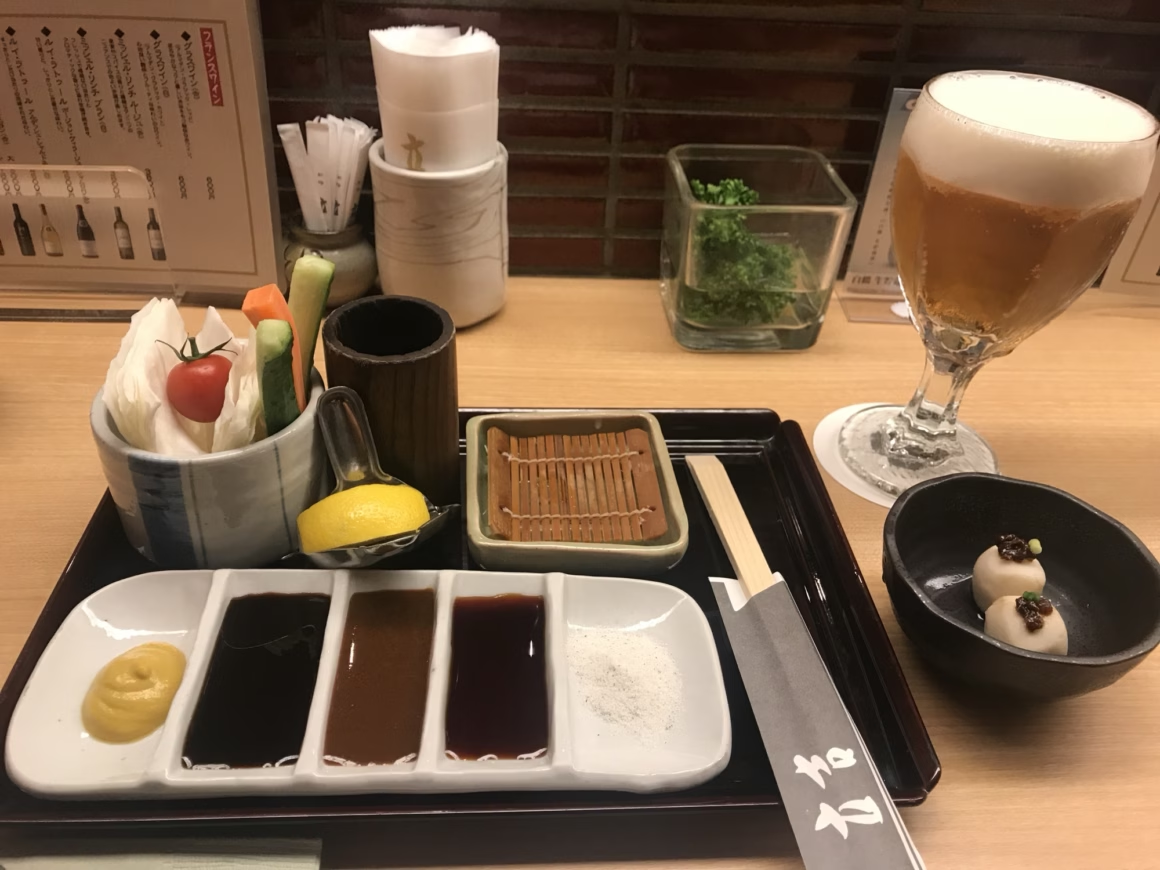
If you are pairing beer with spicy food, think beyond the word “spicy.” Ask what else is happening in the dish.
Why Belgian Sour Beers Deserve a Place at the Table
I will admit my bias here. I have a particular love for traditional Belgian sour beer, especially lambic, gueuze and fruit lambics. After years of visiting breweries and pairing these beers with local food, they’ve completely changed the way I think about what beer can do at the table.
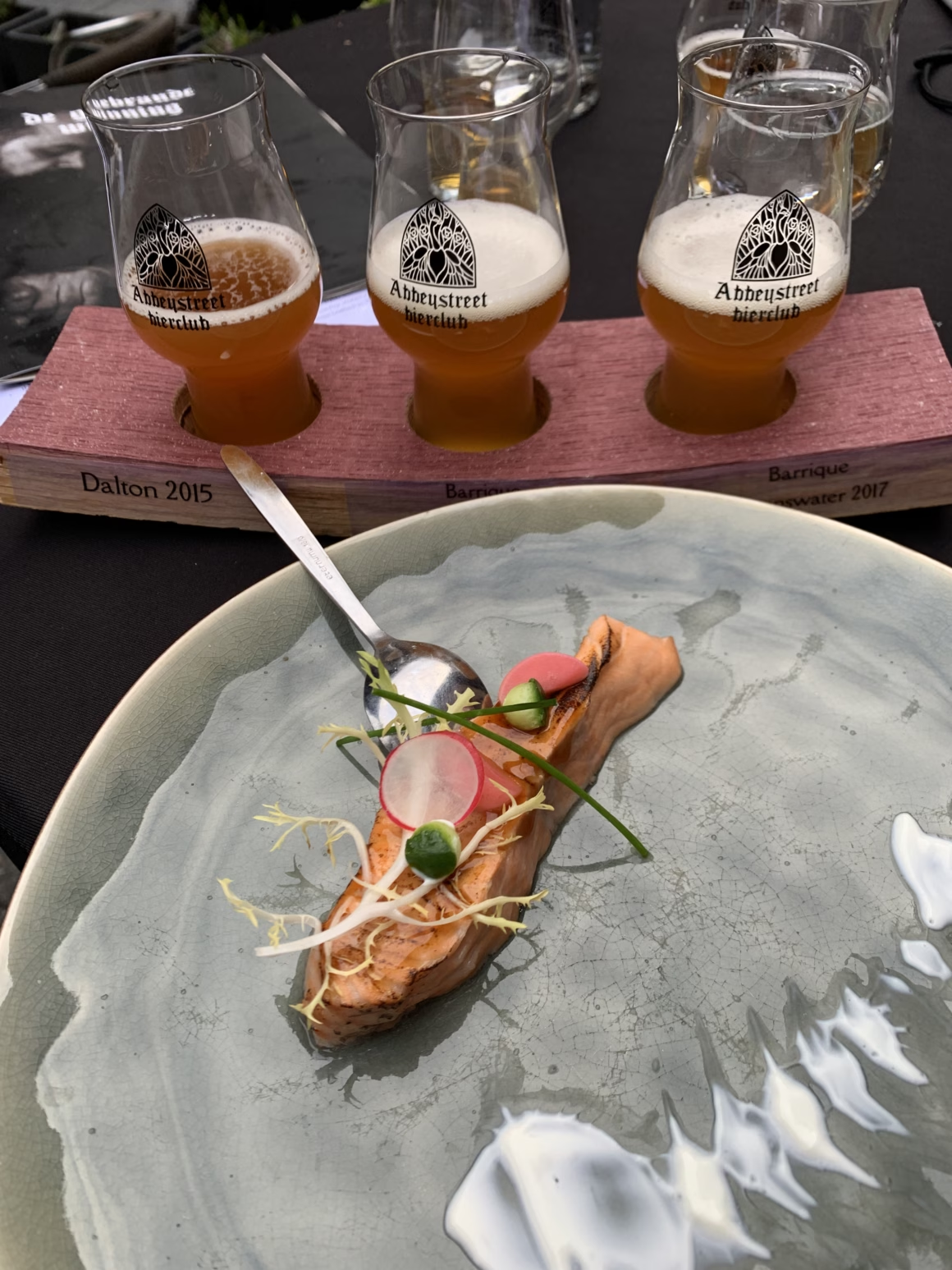
A traditional gueuze may bring acidity, carbonation, dryness, oak and complex fermentation character. A kriek can add cherry without necessarily becoming sweet. Other fruit lambics can move in completely different directions depending on the fruit, producer, blend and vintage.
In some ways, these beers can behave more like wine at the table than many people expect beer to behave.
Try gueuze with rich cheese or fried food. Try kriek with duck, game or dark chocolate. Explore fruit lambics with cheese. Consider how a dry, acidic beer might work with fatty pork.
But be careful with acidity. Pairing an intensely sour beer with a dish already dominated by vinegar, citrus or sharp tomato acidity can become overwhelming. Contrast often works better than competition.
For anyone interested in exploring this world further, I have written more about Belgian lambic beer and brewers, as well as our experiences with Cantillon and 3 Fonteinen. One of the joys of beer travel is discovering places like this that you would probably never find unless someone local pointed you in the right direction.
Don’t Forget Snacks: Some of the Best Beer Pairings Are Simple
One thing formal pairing guides sometimes miss is that beer does not need a three-course dinner to shine. Sometimes all you need is a warm Bavarian pretzel, a little mustard and a fresh helles.
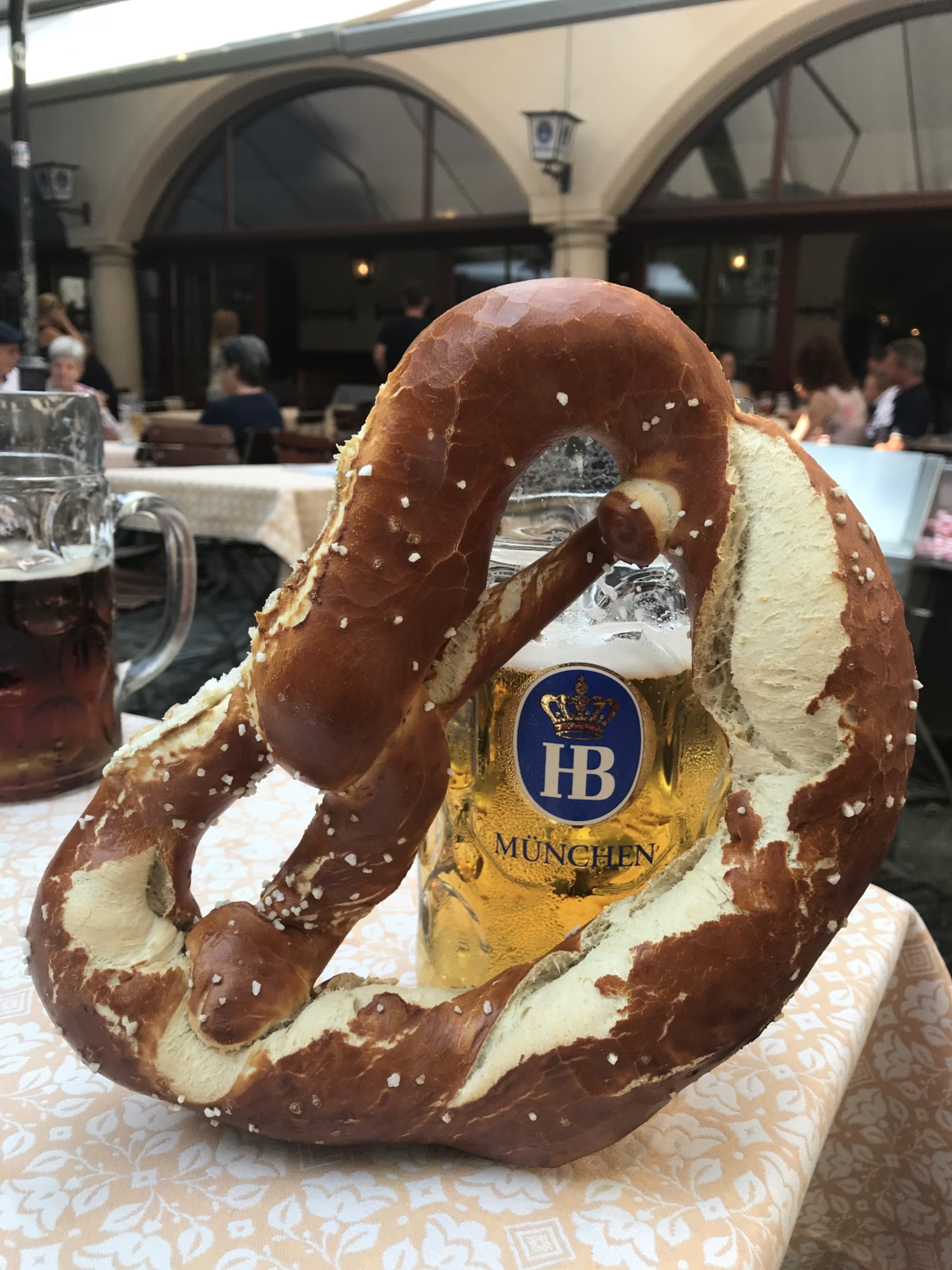
Some of the best beer and food combinations are snacks. A crisp lager with salty potato chips can be perfect. Gueuze with croquettes can be more exciting than a carefully plated restaurant pairing. A malty amber beer with roasted nuts makes sense without requiring any analysis. A sharp, hoppy beer with aged cheddar can turn two things from the fridge into a surprisingly satisfying combination.
Travel reinforces this for me constantly. Some of the most memorable things I have eaten have come from food stalls, markets, brewery cafés and casual counters rather than formal dining rooms. Taiwan’s night-market culture, for example, is built around moving from one specialty snack to another, something we have explored in our guide to how Asian hawker centers and night markets differ and in our admittedly ongoing obsession with Asian dumplings. If you’re planning a trip to Japan, Taiwan or Vietnam, don’t overthink the beer list. Order something local and see how it changes as your meal unfolds.
That’s one of the reasons I love pairing beer with snacks. They’re easy, approachable and a great way to discover combinations you might never have planned.
How to Create Your Own Beer and Food Pairings
You do not need a certification or a complicated flavor wheel. Start with a few questions.
How intense is the food? How intense is the beer? Is the dish fatty, spicy, sweet, salty or acidic? What is the dominant flavor in the beer? Do you want the beer to echo the food or provide contrast?
When I’m trying a new pairing, I usually run through a simple mental checklist::
- Match intensity first. Do not ask a delicate beer to fight a massive dish.
- Identify the dominant feature of the food. It may be the sauce, spice, fat or cooking method rather than the main ingredient.
- Choose complement or contrast. Echo a flavor or deliberately push against it.
- Consider carbonation, bitterness, sweetness and acidity. These can matter as much as flavor.
- Taste the beer and food together. Then pay attention to what changes.
Take a bite. Take a sip. Go back to the food.
Did something new appear? Did the beer suddenly taste more bitter? Did the food become sweeter? Did the pairing refresh your palate or wear it out?
That little experiment tells you more than memorizing a rule that says porter goes with one food and pilsner goes with another.
And if the pairing is terrible? Good. Now you know.
Some of the most interesting things I have learned about beer and food have come from opening the “wrong” bottle and discovering exactly why it was wrong. Occasionally, the supposedly wrong bottle turns out to be brilliant.
Beer and Food Pairing FAQ
The best starting point is to match intensity. Delicate foods generally work better with lighter beers, while rich or strongly flavored dishes can handle more intense beers. From there, decide whether you want complementary flavors or contrast.
There is no universal answer. Crisp lagers, wheat beers and lower-alcohol fruity beers can work well, but very bitter or high-alcohol beers may intensify chili heat. Consider the type of spice, the amount of heat and other elements such as sweetness, fat and acidity.
The best beer depends on the style of barbecue. Crisp lagers pair well with pulled pork, pale ales and IPAs complement burgers and grilled meats, while porters, stouts and Belgian dubbels stand up to rich brisket and smoked beef. Match the beer to the intensity of the food for the best results.
Rich and fatty foods can be excellent with sour beer because acidity helps balance richer flavors. Depending on the beer, try fried foods, cheese, duck, pork or dark chocolate. Traditional gueuze and fruit lambics offer very different pairing possibilities.
It depends on the cheese. Saison can work with goat cheese, Belgian quadrupel with blue cheese, gueuze with rich or funky cheeses and crisp lager with milder options. The intensity of both the beer and cheese matters, which is why beer and cheese pairing deserves a guide of its own.
Absolutely, but watch the sweetness level. A beer that is much drier than the dessert may taste thin or harsh, while an extremely sweet beer with an extremely sweet dessert can become cloying. Stouts, fruit beers, barleywines and Belgian strong ales can all work with dessert when chosen carefully.
Dark chocolate pairs beautifully with rich beers like imperial stouts, porters and Belgian quadrupels. For something more unexpected, try a traditional Belgian kriek. Its bright cherry flavor and acidity create a surprisingly balanced pairing with dark chocolate.
Neither is inherently better. They offer different possibilities. Beer brings carbonation, bitterness, roasted malt, yeast character and an enormous range of styles that can make it exceptionally versatile with food.
No. Beer style is a useful starting point, but the specific beer matters more. Alcohol, bitterness, sweetness, acidity, carbonation and overall intensity can vary dramatically within the same style. Two IPAs or two stouts may behave very differently with the same dish.
The Best Beer and Food Pairing Is the One You Want to Try Again
Beer and food pairing can become incredibly technical if you want it to. There are books, courses, certifications and enough terminology to make a casual dinner feel like an exam.
I prefer to keep the curiosity and lose the pressure.
Pay attention to intensity. Think about complement and contrast. Notice how bitterness, sweetness, acidity, alcohol and carbonation interact with the food. Learn from the combinations that fail.
Then keep experimenting. I’ve found that every beer pairing teaches you something, even if it’s simply discovering that two flavors don’t belong together. For me, the best beer and food pairings are tied to the same things that make travel memorable: discovery, surprise and a sense of place. That is also why I have always enjoyed drinking beer at the source. Visiting breweries, neighborhood pubs and local restaurants often teaches me more about a destination than any guidebook ever could. The beer is only part of the experience. The local food, setting and traditions around it can completely change how you understand what is in the glass.
Sometimes that means a carefully chosen Belgian sour with dinner. Sometimes it means a cold lager and a salty snack after a long day of exploring.
After all these years, I’ve found that the best beer and food pairings usually come with a story. They’re the meals that instantly take you back to a place, the brewery you almost skipped, or the little neighborhood restaurant that surprised you. Long after you’ve forgotten exactly what was on the plate or in the glass, you’ll remember how they came together. Those are the pairings worth chasing.